Sunday, May 24, 2015

DIY Backyard obstacle races without spending money on equipment!


Continuing the theme for Moving it in May we decided to get really inventive and make our very own backyard obstacle course, out of nothing but what we had lying around. Sometimes you find yourself thinking you need to fork out money on expensive equipment for your kids to get a real physical workout. I know I get caught up in that trap from time to time. In Australia we bought everything from trampolines, swings, slides and a climbing set. Now that we are on an extremely tight budget, there is no option but to make do with that we have.

As you can see in the photo above, our obstacle course has 7 elements.  The course was designed to include elements that required balancing, crawling and jumping so that the children were forced to work on their   vestibular system, their core muscles and proprioceptive sense. Jumping, crawling and tumbling also provide fantastic opportunities for children to further develop their body awareness and gross motor skills. 

Note: If you feel your children are not that great on their feet, maybe they have extra physical needs, a good idea to keep them safe is to get them to wear bike helmets. I tried this with my child before I knew that she could manage the course easily.


Following are a few photos to help you see the components of our course, how we made them and how we used them.


The course begins with sliding down this slide, which my in-laws have permanently in the garden. It's just a plastic kids' slide that you could easily pick up second hand if you don't have one. 


Next we found two long wooden poles on the side of the house. Not sure where they came from but we tied them up with some tape and they became the 'balancing beam' to walk across. 


Two more sticks, a few old bricks and tada! you have some mini hurdles. 


We were super lucky to find some old tires in the shed. This made a great balancing element for our course. Initially I thought the kids could jump in them but they decided to walk on them, balancing their way across.


A few old pots spaced like this acted as a running section with the kids having to run, weaving through and around the pots. Though at one point the kids decided to just jump over them. 


This here is a pool noodle cut in half length ways and pinned into the ground in an arch shape using tent pegs. For this element the kids had to crawl under the arch.


The last part required an adult's help to hold the hoola hoop up. For this part of the race, the kids had to do a somersault through the hoop and then run back to the slide, finishing the race.

To make it more of an official race, we wrote out names down on pieces of paper on which I then wrote the times they kids had completed the race in. I used my phone as a stopwatch which made it easy to time each child's attempt. The kids loved finding out if they'd beat their personal best time. I think timing the kids was what motivated them the most to play this game for over an hour. I am sure at the end of it they went through the course at least 30 times. (I ran out of space on the paper for writing all the times down)


Here are some shots of the kiddies going through the obstacle course.


 Anyhow I hope this post has shown you how easy it is to set up a fun physical activity for your children without breaking the bank. Of course the beauty of it is that you can redesign and arrange the course every time you set it up again, keeping the kids interested and challenged!


Until next time, happy playing!


Monday, May 18, 2015

Bowling without a ball or pins, how do we do that?

We have had the most shocking weather this afternoon, gloomy and rainy, not that cold but still not the kind of weather you go out in. My daughter thought this was a great opportunity to beg her mother for a Disney film but we'd already watched one the day before, ok and the day before that. So not today kiddo!

So while she continued to nag and play the 'I'm tired, I need a quiet film' game I searched the house for stuff we could use to play a fun and inspiring game and specifically one that did not require us to sit on our bums.

So with a hoola hoop, some bean bags and a bunch of balloons we invented our own version of ten pin bowling, minus the ball and pins.

Just to let you know this kept the whole family entertained for around an hour and we only stopped because we had to sit down for dinner. Best thing about it, the nagging for a film instantly stopped!

So if you are wondering how balloons, a hoola hoop and bean bags become a game of bowling continue reading!

What you will need
  • 5 bean bags
  • 10 balloons 
  • 1 hoola hoop
  • Something to mark a line to throw from. 
  • All breakables removed from the area. 
Just like bowling, the aim of the game is to throw something that will move ten items. This time you throw the bean bags to knock the balloons out of the hoop. Like in bowling you get a limited amount of shots to knock out the ten balloons. In the our version that we played ,we let each player have 5 shots.


Once you've had your shots you need to count how many you've knocked out and mark that down on a tally sheet

Note: If you have a preschooler or first grader you can easily use this game to introduce subtraction. Just count the balloons left in the hoop and subtract that number from ten!


Just like in regular bowling, you can play a round of 10 turns and at the end tally how many balloons you knocked out of the hoop to get your total score. Person with the highest score wins!

For anyone trying this with a non-verbal child, below are two aided language displays you can use with this game. One is specifically for this game and other other is a general numbers 0-10 that you can use with the game or for other games with numbers. Feel free to use for personal use only.

Note: If you don't know how to use aided language displays please see my post here for more details. 


I hope you get to try our version of bowling. If only I had video of my daughter playing. How she laughed every time she hit the balloons making them fly into the air! This is seriously some great family fun!

Happy bowling and happy playing! 


Saturday, May 16, 2015

How we play with the world's largest scrunchie

Yesterday we had the honour of hosting my beautiful nieces' birthday party. Just a casual affair in the backyard with barbaque and cake. The weather was great and the grass was soft and green, begging to be played on. So with that in mind I thought I'll bring out the 'giant scrunchie' and let the kids explore playing with it. I didn't tell them that it was for playing Elastics I just handed it over to see what they would do. The results were awesome and creative.

At first the kids decided to play reindeers and Santa. My niece took the lead as Rudolf and instructed the others to be reindeers and Santa at the end. This occupied them for around 15 minutes, running around the garden shouting out "faster, faster!" At one point they decided to be horses, galloping rather than trotting around while making horse noises.


It seems the scrunchie also lends itself quite nicely to a game of tug-o-war, which the kids found amusing. At first I thought they were fighting over it but then I noticing them laughing and smiling so I figured it was a game instead.


The last of the games that the kids played this day was a simple game of tumbling and jumping over the rope. My daughter loved challenging herself by doing sommersaults over the elastic. The others enjoyed jumping over it or jumping into it. There was also some crawling under it which was fun too. 


It's amazing to watch children be so inventive with just a simple piece of elastic. Maybe sometimes more is less even with kids' toys and equipment. Either way I know that there must be more ways to play with this giant scrunchie and that we will have many more days of fun with it. We might even use it for what it was originally made for and that being Elastics.

Have you made one yet? See my DIY sewing tutorial here and join in the fun!

Happy playing.

Monday, May 11, 2015

DIY gigantic scrunchie for Elastics game!

A while ago I introduced my daughter to the classic schoolyard game of Elastics. While I taught her some basic moves like jumping in and out of the loop, we haven't played the official version of the game yet as she is only 3 years old and not ready for more complicated moves. She also found it more interesting to make her own moves, doing somersaults over the elastic or crawling under it, so I thought I'd just let her go with that and see how creative she could get.

 If you are not familiar with the game Elastics and are wondering what it is, Elastics a classic schoolyard game that is often played by girls. It is played using a long elastic band that has the ends tied together forming a big loop. Two players stand in the middle of the elastic loop and hold it around their ankles, standing opposite each other wide enough that the elastic hold straight but still able to further stretch. A third player then jumps in a particular pattern in and out of the loop, sometimes over it, sometimes crossing it over and other times deliberately stepping on it.  Once the player jumping makes a mistake, for example, either getting tangled in the elastic or not jumping over it correctly, then that player takes an end and the next has a turn to jump. Often the jumping actions are accompanied by rhymes or songs. As you complete the pattern at the  first level, which is ankles, the elastic is then hitched up to knees, then under bums, hips, waist, underarms, neck and sky. As a kid I was only ever good enough to jump as high as waist.

When I first introduced my little one to the game I just simply got a long piece of elastic and tied it at the ends.  It was a thin piece of elastic, around a quarter of an inch or 0.5cm and I found it hurt their skin a little when they would run into it stretching it to full capacity. It was also a little difficult to see when jumping on concrete surfaces as the white of the elastic blended a little with the colour of the concrete. So with this in mind I thought about how I could make the elastic more colourful and 'softer' for the children to play with After some thought I came up with the idea of turning the elastic into a giant scrunchie, an easy way to make the elastic more colourful, thicker and a bit softer for the kids. Below are instructions so you too can make your own Elastics scrunchie

What you will need

  • Fabric/s non-stretch
  • Scissors
  • Sewing machine
  • Rotary cutter
  • Quilters ruler 
  • Cutting board
  • Sewing thread
  •  Quarter inch thick elastic 
  • Safety pins x2 

First cut a long piece of elastic measuring around 14.8 feet. Doesn't matter if it is larger but I wouldn't recommend smaller. Once you have cut your piece then get someone to help you stretch it as far as it goes and then remeasure it. You need your fabric to be just a bit longer than the elastic at full stretch.

Once you have those figures, cut out your fabric at 3 inches wide and in pieces that add to your required length plus seam allowances. So if you are using various fabrics and have pieces say 3inch wide and 10 inches long,  then cut your length at 10.5 inches long as you need to add  half an inch to every piece to accommodate for an 1/4 inch seam on either side. 


Once you have done that simply sew the ends together, right sides facing. If you are using different coloured fabrics don't forget to have the two end pieces different colours so that you don't have two of the same when you join them at the end.


After you have sewn the pieces all together, fold over the 3 inch width and sew an 1/8 of an inch from the edge. See photo below.


Once you have done that you should have a long 1.5 inch wide and 17.8 feet long snake of a thing. Unfortunately that was the end of the easy part of this project, now comes the part where you have to turn it all inside out! In order to do that get hold of a safety pin that is not going to open as you thread it through. I used one that is for baby cloth nappies to make sure it wouldn't open. See photo below.


With a bit of fiddling, get the pin to go through the tube by scrunching the fabric over it with your thumbs. Here is a quick YouTube video I found that shows you how to do it. This is not my video so I can't take credit for it, but I still don't know how to load videos on my blog so sorry.


Once you have conquered the turning of the giant scrunchie, you then need to thread the elastic through. Take two safety pins now. Using one of the safety pins, attach one end of the elastic to one end of the tube, securing it so that it doesn't go into the tube while you push the other end through. With the other end, hook the other safety pin onto the end of it and push it through the tube like you did before. Don't worry this time it is easier!


After that is finished, take both end of the elastic, and using the sewing machine and a zig zag stitch, sew the pieces together. Push one fabric end into the other and the raw edge of that side under and simply sew the opening shut using a straight stitch. See photo below.


And there you have it, your very own soft and scrunchie elastic to play with! Or perhaps you've just made the world's biggest scrunchie ready for the Guinness Book of World Records?

Next time I'll have to post about playing Elastics and other games that your kids can play with their giant scrunchie!

Until then happy sewing and happy playing.

Sunday, May 10, 2015

Books, Story, Action!

As you might know this month is Moving it in May here at We are Happy Playing and I've been doing a lot of thinking about how to incorporate more movement into our daily lives and schedule. Since the post about children and yoga, we have made yoga a regular activity that we do after kindergarten using the Cosmic Kids' videos on YouTube and the I am Love yoga app on the tablet as part of our bedtime routine.

A daily activity we participate in as a family is story time, so I've been looking for ideas that would make story time not just a time to sit and listen, but a time where we can get active while enjoying a story. Immediately I thought about acting out what is written in the story, but what books would lend themselves to this type of activity? Luckily we had two such books sitting on our shelf!

The first one is  We are Going on a Bear Hunt by Michael Rosen.


The story is of a brave family that go out to hunt a bear. In order to get to the bear's hideout they find they need to go through a series of environmental conditions such as long swishy grass, squishy mud and a snow storm. As the family go through these different places there is great opportunity for children to use their bodies to act out the actions. Hands waving like swishy grass, stomping through gooey mud etc. 

Here are some photos of my little one, her cousin and their  interpretation of the book.

 Swishing through long grass.. Swishy Swashy

 
Stomping through thick oozy mud!

Apparently this is how these two monkeys feel one moves through the river, splash splosh. Not by waddling through it but swimming across it.

And we must not forget to hide under the covers when the bear chases us home.

 Just a little note, in looking for images of the book for this post, I came across this video which actually shows the author performing the story. How crazy random is that!? So I decided to share. While this is kinds cute and quaint, I do love the more energetic version my daughter came up with!


The second book we had on the shelf was Panda Bear Panda Bear What do You See? by Bill Martin Jr and illustrated by the wonderful Eric Carle.

In this book a series of animals are asked what they can see, with each responding with the name of another animal and the action they are performing. See pictures below.

"Water buffalo, water buffalo what do you see? I see a spider monkey swinging by me." 

"Blue herring, blue herring what do you see? I see a prairie dog digging by me. "


It's pretty obvious to see why this book makes a great story for children to move to. Simply ask the children to act out the different things the animals are doing as you go through the book.

As you may or may not know there are other books in this series with the first being Brown Bear, Brown Bear, What do You See? and Polar Bear, Polar Bear what do You Hear? While these two books focus on colours and sounds, there is no reason why children couldn't be encouraged to act like the various animals in the story, especially with the second one slithering like a snake while you hiss like one would be a wonderful physical experience for any child.

If you are looking for other books with animals that children can pretend to be try Dear Zoo by Rod Campbell and Animal Moves by Dawn Apperley. Both books are simple and children can act out the animals featured in both books.


Where the Wild Things Are  by Maurice Sendak are also lends itself beautifully to being acted out by children.Pretending to sail across the sea, stomping and growling like a wild thing all part of the fun you can have with is story.


Whilst this is just a handful of books that lend themselves well to being acted out through movement I am sure there are many more and we plan on finding those over the next month or more. Maybe you yourself have some that you know of? If you do we would love to hear from you in the comments section.

Until next time happy story time and happy playing.


Thursday, May 7, 2015

Yoga for children and online class ideas for families on a budget

As you may already know here at We are Happy Playing, we are celebrating Moving it in May, making May the month that we try to incorporate more movement in your lives. As part of this commitment to more movement I decided to look into the art of yoga and how it can be practiced by young children.

What is Yoga?
To be honest I don't know where to even start with this question as yoga encompasses so much and it is not just one practice, there are several different types of yoga all with a different focus. The best way I could sum it up was- Yoga is a is a  physical, mental and spiritual practice or discipline that includes holding particular poses, meditation and breathing techniques among other things. Apparently the word yoga means "union": of the individual consciousness or soul with the Universal Consciousness or Spirit.

So what are the benefits of  practicing yoga for your child? 
If you have ever looked at the literature online, you will quickly learn that the benefits of practicing yoga are many and  not only benefit the child physically, but when done with intention, can also benefit the child mentally, emotionally and spiritually.

Benefits include 
  • Enhanced physical flexibility and physical strength
  • physical fitness
  • Better body awareness
  • Refinement of balance and coordination
  • Strengthening core muscles  
  • Better focus and concentration  
  • Boost in self-esteem and confidence 
  • Strengthening of the mind-body connection
  • improved posture
  • reduce physical and mental stress
  • enhance discipline
  • improved breathing and circulation
  • Constant self-discovery and inquisitiveness 

Yoga and children with Special Needs
What I have found most surprising is that yoga has been found to be particularly beneficial for children with special needs.Visi Tilak in this article explains that  "Studies have shown that yoga benefits children with autism and ADHD. The National Public Radio has reported that researchers surveyed teachers at a Bronx public school that had a daily yoga program and found that the program reduced kids' aggressive behavior, social withdrawal, and hyperactivity, compared with a control group of kids with autism who did not practice yoga."  Kristie Patten Koenig, Ph.D., an associate professor of occupational therapy at New York University says yoga was effective because  "it seemed to play to the strengths of kids with autism while also reducing stress." It has also been shown that yoga helps address kids' heightened anxiety, poor motor coordination, and weak self-regulation, all of which are typical with children with Autism.

Eliyabeth Rowan talks about Autsim and Yoga in her article "As we know children with autism often suffer from a highly sensitive nervous system and are easily over stimulated by their environment. Yoga’s natural setting of dim lights, soft music, smooth mats, and “inside” voices creates a comforting environment that helps children with Autsim relax. Also as Elizabeth Rowan states  "Yoga’s physical poses allow nervous energy to be released from the body in a controlled manner, also leading to a calming sensation. Less stimulation means less uncontrollable behavior, outbursts and repetitive nervous movement.  Elizabeth  also says that "Yoga is particularly instrumental in helping kids with autism learn self-regulation. By becoming aware of their bodies and aware of their breathing, yoga provides them with the ability to cope when they start to feel anxious or upset." Furthermore yoga is orderly and consistent which helps children with Austism stay calm as many thrive when things are ordered and predictable.  Whilst I am no expert in yoga, I can only imagine that the deep pressure on the joints and limbs from some of the poses must also be beneficial in calming a child who seeks out deep pressure and who benefits from any heavy work or weighted vests and blankets. 


How to introduce yoga to your child
From my perspective, there are two options when it comes to introducing your child to yoga.

Option 1. Fork out money and enrol them in a kids' yoga class.
There are quite a few advertised on the Internet run by teachers who are experts in yoga and working with children. There are even classes specifically designed for children with special needs.

Option 2. Get hold of some beginner yoga books and do teach your child yourself.
 If you ask me that seems a little daunting. When I look at that list of benefits listed above, I can't help but think to myself, how can  'I' achieve that with my child through yoga? There must be special teaching techniques that you need to know about to achieve so much. I might be able to do the poses but I have no clue about breathing techniques etc.

All I can say about option 1 and 2 is that  I want an option 3! I don't have much money for classes but I don't feel confident in just doing it myself. Is there a way I can spend little or no money to access some online classes? Looks like there is! 

If you go to YouTube and type in Yoga for kids you will find that there are some videos of kids' yoga classes. Below are two I came across that I think are really good.


I love how the teacher talks about breathing and describes the poses using language children can relate to like "hold your hand up like they are carrying a big ball" I am only disappointed that I can't find anymore videos like this although the two together are over an hour's worth of yoga so that could be enough.

I also found a lot of Cosmic Kids Yoga Adventure videos. I can see these videos being very attractive to young kids. Combining a story with poses and songs makes this a wonderful yoga experience. The only problem I had was that I felt the poses were done a little too fast for a child to follow. I personally would like to hold some of the poses longer. Also there is no focus on breathing which isn't all that bad if you are doing it with toddlers it might be enough for them to just try and make the poses. Below are two examples of YouTube videos I found for this series.


I recently also came across YogaDownload, a website you can subscribe to for 1, 3,6 or 12months at a cost which I think is reasonable. For a month with unlimited classes and 4 free classes to keep, you pay just $10.00. For 12 months and unlimited classes costs $90.00 I know when I did pregnancy yoga classes were around $10.00 a pop so this is much cheaper especially if you do one everyday. Now there are not only adult classes but there are around 10 kid's classes and about 5 guided meditations for children.as well, hence why I'm mentioning it here. If you were to get the unlimited 1 month subscription for $18.00 I think you could cover all that and download the kids classes to keep and play forever.

If you have a tablet, there are also various kids' yoga apps you can try for free or buy for a few dollars. Some that I have tried recently with my daughter are Mon p'tit Yoga, the free version, and I am Love, Kids' Yoga Journey, which cost 99 AUD cents. Both are available on android powered tablets. (not sure if it's also available for IPads too)


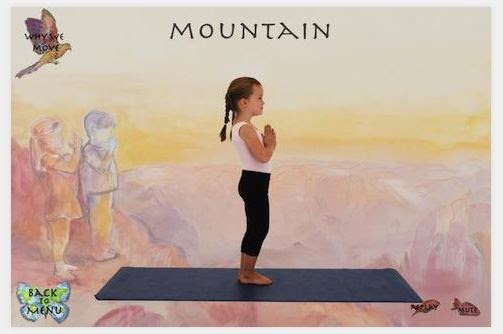
I am Love, Kid's Yoga Journey is my favourite app. It has beautiful water colour illustrations as backgrounds and clear photographs of children going through the 13 poses. Each pose is explained perfectly and shows how you transition from one into the other.There is also instructions regarding when and how to breath and a button you can press to find out what the pose is good for. The app also is accompanied by beautiful guitar music which can also be muted if you like. 


Whilst not my favourite of the two, Mon p'tit Yoga or My Little Yoga is also a lovely app that has two component,s the poses and a game related to the poses. The poses are illustrated through different animals and the graphics are very much targeted at toddlers. The poses are explained in writing and you can also play an audio clip that tells you how to perform the pose. Some poses also has a bonus story to enjoy. The game is simple and not really a feature worth mentioning, just a simple matching game. Still, a good little app for beginning yoga.


Anyway I hope you have found this post inspiring and informative. Mabe you've even tried yoga with your child before?  We personally have decided to use the I am Love, a Kids' Yoga Journey app to kick start our yoga journey. My daughter has found it the most appealing and accessable of all the videos and apps and I like it too. We will let you know how we go in a future post.

Let us know what you think and if you end up trying any of these videos or apps. Until next time, keep moving and happy playing.

Saturday, May 2, 2015

Interview with Occupational Therapist Cara Sheekey on the topic of children and movement and how to get our kids moving!
Here at We are Happy Playing, we will be celebrating May as the month for movement! We are calling it Moving it in May. Why? Well first of all here in Northern Europe the sun is finally starting to shine again, the days are longer and warmer and it's making us all feel like we better take advantage before fall and winter come again! Also it's no secret that kids these days are spending more time doing sedative activities, with screen time being a huge contributing factor. We also know that this leads to health problems but sometimes as parents we are not that sure about how much and what kind of movement and activities our children need or how a lack of movement can really affect our children. For this reason, and to kick off Moving in May, I have asked an EXPERT!


May I introduce the awesome and very much in-the-know Cara Sheekey, Occupational Therapist. I'm not exaggerating people,she really is awesome! I know this because I had the privilege of working with her at Yarraville Special Developmental School in Melbourne. Her advice, guidance and strategies helped me bring movement into my classroom in ways that improved my students, all who are with physical disabilities and sensory processing issues, physically, behaviourally and academically!

So without further ado, I here by present...

We are Happy Playing's interview with
Occupational Therapist Cara Sheekey on the topic of children and movement.

First of all, thank you Cara for agreeing to do this interview with us. Can you tell us a little about yourself, education, experience and what you are currently doing in relation to your work with children.
My undergraduate degree was an Applied Science degree in Exercise and Sports Science. Following that I did a Masters degree to qualify as an Occupational Therapist. I have spent the thirteen years since I graduated working as a Paediatric Occupational Therapist, in Sydney, the United States and currently in Melbourne. During that time I have worked in private practice and in both special schools and mainstream schools. I now have a small private practice in Melbourne, in partnership with a Speech Pathologist. We specialise in the assessment and treatment of children with complex developmental needs; including Autism, Sensory Processing Disorder and other developmental challenges that impact upon a child’s capacity to reach their potential. We take a play based developmental approach guided on the principles of DIR®/Floortime

One of the things I worry about as a parent is the amount of movement my child is getting during the day. In your opinion how much movement do children really need in their day?

My immediate answer would be that the general recommendation is 60 minutes of moderate to strenuous exercise every day for all people (parents too!). This figure though is generally given in regard to school aged kids, teenagers and adults, not pre-schoolers. Knowing that you have a pre-schooler (as I do) when I thought about that recommendation I realised that it couldn’t possibly be enough for them, they need WAY more than an hour a day of physical activity. As it turns out, at least three hours a day is the recommendation. I even came up with a reputable source to prove it. Link to reference article While one hour for the school aged kids and adults refers to moderate to strenuous exercise, the figure for the pre-schoolers refers more generally to time being active and moving around to play.


How does a lack of movement affect our children?

The most obvious answer is that lack of physical activity is a major contributor to obesity and other associated health issues. The impact of a lack of physical activity is far greater though than whether or not your child is overweight.

It is through movement based play that many aspects of our nervous systems are developed. While we talk about the five sense quite often (touch, taste, smell, hearing, vision) there are in fact two other senses that are very relevant to this topic – the vestibular system and the proprioceptive system. The vestibular system is our sense of movement, knowing the position of our body relative to gravity (knowing if you are upright or standing on your head, if you are moving forward, if you are falling, etc). The proprioceptive sense is our body position sense, it tells us the position of the various parts of our body in space and relative to one another (knowing if your hands are in front of your body or by your side, knowing how hard you are pressing on something, etc). These two sensory systems work together very closely to help us to use our bodies and successfully interact with our environment. The neurological connections required to help these sensory systems to mature and work for us are developed through use, and we use them by moving.

Another very important thing that is developed in the early years through movement is core strength. Our core strength is what helps us to maintain a stable upright posture. This is good for many obvious reasons, like being able to stand up and not fall down because your muscles have fatigued, but it is also vital in providing a solid base from which to then use your limbs in more precise ways. For example, to be able to sit and write or draw you need to develop adequate core muscles to be able to support your body upright and hold your trunk and shoulders steady while moving only your hands/fingers to make precise movements. Like our sensory systems, core muscles are developed through use, and we use them by moving.

The development of these sensory systems, in addition to core strength and endurance, is vital for children to reach their potential in a number of areas that go far beyond movement itself. Sure, they need these skills to be good athletes but they also need them to do well in a classroom. Challenges in any of these areas can impact fine motor skills, which impacts handwriting development and potentially literacy development, a poorly developed vestibular systems can impact attention and concentration, poor proprioception can make it difficult for a child to maintain their own personal space around others and so on (really, I could go on but I’m sure you get the gist, movement is important!).

Is letting our children 'run around' in the backyard enough or are there particular types of movement that are more critical for child development?

I always say that it is best to follow your child’s lead. Running around the backyard can be great and for some kids they may well get enough movement out of playing and running around in their backyard. Other kids may struggle to come up with ideas and if you send them out into the backyard to “run around” they may not do much moving at all.

Connect with your child, see what interests them and engage with them around that and you will be moving in no time. If you are struggling with a child who is reluctant to step away from the screens and move, go with them and play together. Kids love nothing more than playing with an engaged adult and the benefits go far beyond their physical health.

There aren’t any specific movement types that are necessarily more important, but variety is key. To develop the sensory systems we talked about earlier you want to be engaging the sensory motor systems in many different ways. Exposing your child to a variety of sensory motor experiences is important.

Finally, the best way to ensure that your kids are active is to lead by example, run around with them, go on a bike ride together, play at the playground with them. If kids see their parents being active that becomes their normal, what they assume everyone does, and they are much more likely to grow up to be active adults. Link to reference article

You spoke about the importance of two other senses the vestibular and proprioceptive sense as well as core strength. What are some activities that help develop a child's vestibular system, proprioceptive system, and core strength? 
Many movement activities that children engage in will include activation of both the vestibular and the proprioceptive systems, and strengthen their core muscles as well. Here are some specific examples though for each one:

Activities with a strong vestibular component:
  • Somersaults, flips, handstands, cartwheels
  • Jumping games; trampoline, on couch/mattress or bed
  • Playground equipment – swings, climbing, slide, monkey bars
  • Movement type toys – bike, skate board, scooter, roller blades
  • Wrestling or rough housing
  • Rolling like a log, down a hill is even more fun!
  • Skipping rope games
Activities with a strong proprioceptive component:
  • Tug of war
  • Wheelbarrow walking
  • Jumping/crashing into a pile of pillows
  • Marching
  • Bumping down the stairs on your bottom
  • Crawling through tunnels or boxes
  • Helping with household activities – carrying groceries, taking out rubbish, sweeping, digging in the garden
Activities that develop core strength and endurance:
  • Playground equipment – monkey bars, climbing
  • Crawling games – obstacle courses, races
  • Lying on back doing bicycle legs
  • Animal walking – donkey kicks, crab walking, frog hops
  • Climbing trees
  • Hula hooping
  • Swimming

What about being part of sports teams or dance groups several times a week? Is that enough and are they a viable way of getting your child moving?

Sports teams and movement type classes can be great for many reasons, and they are certainly a viable way to get your child moving. They aren’t essential though by any means. Again, I believe that it goes back to following your child’s lead and their interests. Parents regularly ask me what sport or class they should enrol their child in and I always ask, “What is the child wanting to do?”. Give them some options, go and trial a class or observe one and see if it appeals to your child. If you are intent on helping your child move more and you push them in to something they aren’t interested in, or ready for, you probably won’t meet your goal of getting them moving, and you will get lots of added frustration and complaining to go along with it!

What are some simple ways that you recommend for parents wanting to incorporate more movement in their child's daily routine?

If you want to get your kids moving more I would say the first step is to look at what they are spending their time doing. If you are worried about a lack of movement in your child’s day it would be likely that they are spending a lot of time doing screen based play. This needs to have limits placed on it, especially with young children. Current recommendations are for no screen time at all for children under two years, a maximum of one hour a day for pre schoolers and two hours a day for school aged kids Link to reference article

Some simple ways to begin to add movement into your child’s day:
  • Walking places or catching public transport, rather than always relying on the car
  • Go for a bike ride, either to get somewhere or just for fun
  • Leave the pram or stroller at home sometimes, or let your child walk alongside it some of the way if you are walking for a long time
  • Make use of your local playgrounds. There are loads of interesting and innovative playgrounds popping up and many websites reviewing and describing them
  • Go into your backyard (or local park if you are like me and don’t have a backyard) and play chasey or hide n seek or hopscotch or whatever your child is drawn to
  • Make sure that some family outings involve physical activity – hiking, playing sport together, going to a playground
  • Take an interest in your child’s sporting activities, watch their games or practices, cheer them on, practice their skills with them between games

Again, I am going to fall back on my same advice of follow your child’s lead. You don’t need to come up with a fancy lesson or an activity for you to lead them through, they will have the best ideas and their ideas will engage them for longer than anything else (as well as developing many other skills).

Like most parents I don't have a lot of money to spend on play equipment but I'd like to save and invest in a few key pieces. What do you think are the most useful pieces of equipment that parents should invest in that can help encourage their children to move more?

I don’t think you need any expensive play equipment to play or get moving – a few balls and a bike/scooter will take your child a long way. Sure, having a trampoline or some playground equipment in your backyard can be fun but it is by no means necessary, especially if you make use of your local playground and parks.


On that note we end the interview. I hope you readers have been able to get something out of that. I know I have! It's great to know that even from an expert's point of view, we don't need much to get our kids moving. To be honest I was sure there would be at least a small list of equipment that would be suggested with that last question, but looks like our local playgrounds have got us covered. I'm personally also impressed by how much movement relates to our children's over all development, even affecting handwriting and literacy skills. Who would have thought that to be so? 
If you live in Melbourne, Australia and are in need of an Occupational Therapist and Speech Pathologist then you should really contact Cara at her own private practice KidsRISE. Cara works hand in hand with Speech Pathologist Miranda Van Styn. For more information please visit their website at www.kidsrise.com.au

Well I hope you can keep returning this month and join in Moving it in May. If you have any great movement based activities or games you want to share with us just leave a comment. I'd love to write a post highlighting other people's ideas and favourite activities! 

Until next time happy moving and happy playing!